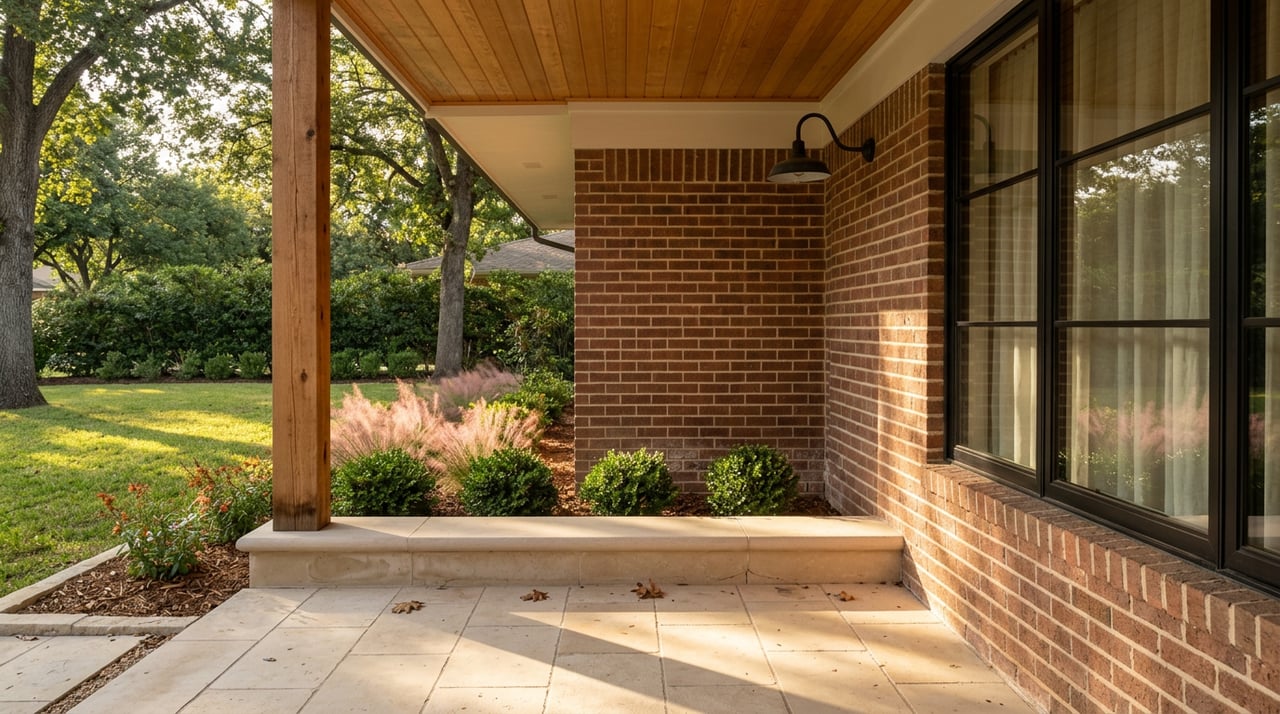
A Local Guide to Celebration Market Sulphur Springs Summer
Most Texas farmers markets happen at 8 a.m. under a tent, and most of them are wrapping up by the time the day turns unpleasant. Celebration Market runs the other direction. This year the market is set for Saturdays, 6 p.m. to 10 p.m., May 16 through September 19, on Celebration Plaza in downtown Sulphur Springs. That is not a small scheduling quirk. It shapes what the market is, who shows up, and how a Hopkins County Saturday actually reads once you have lived here for a couple of summers.
If you moved here for the space and the quiet, the market is where the county remembers to be a downtown for a few hours a week. The trick is understanding what it is for. It is not a substitute for a produce grocery run. It is a piece of a longer summer rhythm that pairs an evening on the square with a weekday roadside stop somewhere out in the county, and knowing which piece does what is the difference between a good Saturday and a wasted one.
The heat is the honest answer. By late afternoon a July Saturday in Sulphur Springs is not somewhere you want a booth of tomatoes sitting in direct sun, and it is not somewhere a family wants to stand in line for shaved ice. Moving the whole thing to 6 to 10 p.m. does three useful things at once. It saves the produce. It puts the splash pad and hands-on activities on Celebration Plaza into the part of the day when kids can actually use them. And it turns a market into an evening out, which is the format the downtown was built for anyway.
That last piece is the one out-of-town visitors tend to miss. The square is a walking loop. An evening market lets you eat something warm from a vendor, let the kids run the splash pad, cross to a storefront, and come back for whatever the musician set up in the plaza is doing. A Saturday morning market cannot ask that of anyone in August. This one can.
The official listing describes the market as locally grown produce, homemade arts and crafts, homemade goodies, and entertainment. That is accurate and it is also a little misleading if you read "locally grown produce" and picture rows of vegetable growers stretching down the plaza. Hopkins County's farm economy has never been a row-crop economy. Texas A&M AgriLife Extension is direct about it: the county is home to dairy farms and many beef producers, mostly cow-calf, and it is an important hay producer for Northeast Texas.
Read that sentence twice and the market makes more sense. The people selling tomatoes and okra and squash blossoms at Celebration Plaza are almost all small operations, often part-time growers or families with a market garden on a few acres, and many of them come in from Delta, Franklin, Rains, and Wood County as well as from Hopkins itself. There is no single dominant farm because the land was never organized to produce one. That is why the produce table looks different every week and why regulars text each other when the sweet corn shows up. It is not disorganization. It is what a small-grower economy looks like when it gets a stage.
The homemade goods side leans the way you would expect from a dairy county. Baked goods, jams, honey, and prepared foods. The county's identity is stitched into that mix, and the strongest civic proof is that the Hopkins County Dairy Festival every June still runs a State Champion Homemade Ice Cream Contest and a milking contest at the Sulphur Springs Livestock and Dairy Auction. The festival is a June weekend. The market is the rest of the summer.
Here is the pattern longtime residents fall into without thinking about it. Saturday night is Celebration Plaza. Sometime midweek, ideally Tuesday or Wednesday when a grower has just picked, is a roadside stand or a small farm run.
Two names are worth knowing outside the market.
Sally's Produce, out in Klondike about twenty minutes northeast of the square, is a rural stand in the honest sense of the phrase. Visitors leave with peaches by the bushel, cherry tomatoes, and okra when it is on. The stand's whole appeal is that whatever came in that morning is what is out. If you are coming back from Cooper Lake State Park on a summer Saturday, it is on the way home.
Rae-Lili Farm in Cooper, one county over in Delta, is the other end of the spectrum. It is a small heirloom vegetable operation that supplies Dallas restaurants and works farmers markets in the region. If you are the kind of cook who wants squash blossoms in June and specific heirloom tomato varieties in July, this is who to follow. Their pull is that they treat variety as the product, not volume.
Between an evening at the plaza and one weekday stop like these, you have covered what the county actually grows and you have not spent an entire Saturday morning in the sun to do it.
A few things have shifted enough to be worth flagging for anyone who last set foot on the plaza before the pandemic reset a lot of local calendars.
A Saturday-night market is not a produce grocery run. It is an anchor. Everything else you eat that week gets easier if you treat it that way.
One of the reasons the market feels rooted in something is that the dairy identity around it is still a working identity, not a museum piece. The Southwest Dairy Museum on the fairgrounds sits inside a working county calendar of livestock auctions, 4-H programs, and dairy events. The Dairy Festival's parade route still starts at Buford Park and comes down Connally Street to the downtown plaza in June, which is one of the reasons the plaza is set up the way it is for the summer that follows.
None of this shows up in a paragraph on a relocation site because none of it is easy to package. If you have moved in from the Metroplex, or from farther away, the useful thing to internalize is that Hopkins County's food scene is not restaurant-led and it is not chef-driven. It is the market, the auction, the county fairgrounds, the small growers who drive in on a Saturday afternoon, and the neighbor with a freezer full of Sulphur Bluff beef. The market is the one place where all of those threads sit within walking distance of each other for four hours a week.
Celebration Market is not a farmers market in disguise. It is a summer downtown in disguise, with a farmers market attached, and it is scheduled at night because Hopkins County knows what August feels like. Treated as one piece of a larger county food rhythm that also includes a roadside stand run and a nod to the dairy and cattle producers who define the working landscape, the eighteen Saturdays between May 16 and September 19 stop feeling like a thing you keep meaning to try and start feeling like the thing your summer is built around.
If you are settling in and want to understand how the calendar here really works, or you are thinking about a move that puts you closer to it, Renee Real Estate Group lives in this county year round. Reach out any time.


We are committed to guiding you every step of the way—whether you're buying a home, selling a property, or securing a mortgage. Whatever your needs, we've got you covered.
Renee Real Estate Group
208 Main St Sulphur Springs, TX 75482